Your Closet Called — It Wants to Be an Anime Character Now
Somewhere between rewatching Fruits Basket for the fourth time and doom-scrolling through TikTok fits, a generation of American anime fans made a collective decision: why just love an anime character when you can dress like one? The result is a full-blown fashion movement that has fast fashion executives furiously refreshing Crunchyroll and independent designers quietly losing their minds.
Welcome to the era of IRL anime aesthetics — and baby, it is chaotic, colorful, and absolutely not slowing down.
Soft Girl, Dark Academia, Cyber Punk: The Holy Trinity of Anime-Inspired Dressing
Let's break down the big three archetypes that Gen Z is actually pulling from their favorite series and wearing to the mall, to class, and honestly, to the grocery store.
Soft Girl energy — all blush tones, oversized cardigans, hair clips shaped like strawberries, and that perpetual look of gentle melancholy — owes a massive debt to characters like Tohru Honda from Fruits Basket and Shirayuki from Snow White with the Red Hair. These are girls who look like they write poetry in a sunlit library and cry at butterfly sightings. Gen Z ate it up. The aesthetic exploded on Pinterest and TikTok around 2020 and hasn't really left. Brands like Shein and ROMWE noticed almost immediately, flooding their platforms with pleated pastel skirts, cottagecore blouses, and lace trim everything at prices that made the trend dangerously accessible.
Dark Academia has a slightly more complicated anime lineage, but pull up Bungo Stray Dogs, The Ancient Magus' Bride, or even Shadows House and you'll see the DNA clearly — structured blazers, muted earth tones, vintage book imagery, and a general vibe of "I am deeply intelligent and possibly haunted." Urban Outfitters has been riding this wave hard, stocking tweed co-ords and vintage-style accessories that could absolutely pass as something Osamu Dazai would throw on between crime scenes.
Cyberpunk aesthetics, turbocharged by renewed interest in Ghost in the Shell, Akira, and the entire Cyberpunk: Edgerunners fandom explosion, brought holographic fabrics, asymmetrical cuts, techwear layering, and neon accents into the mainstream conversation. This one skews a little older and a lot more expensive — techwear brands like ACRONYM sit at the prestige end, while Shein and Amazon dupes flood the budget market with varying degrees of success and structural integrity.
The TikTok-to-Rack Pipeline Is Real and It Is Fast
Here's the thing about fast fashion in 2024: it doesn't wait for a trend to fully develop. It sees three videos of the same aesthetic going viral and immediately starts manufacturing. The turnaround from "TikToker posts Marin Kitagawa-inspired coord" to "Shein drops a near-identical set" is, at this point, measured in weeks rather than months.
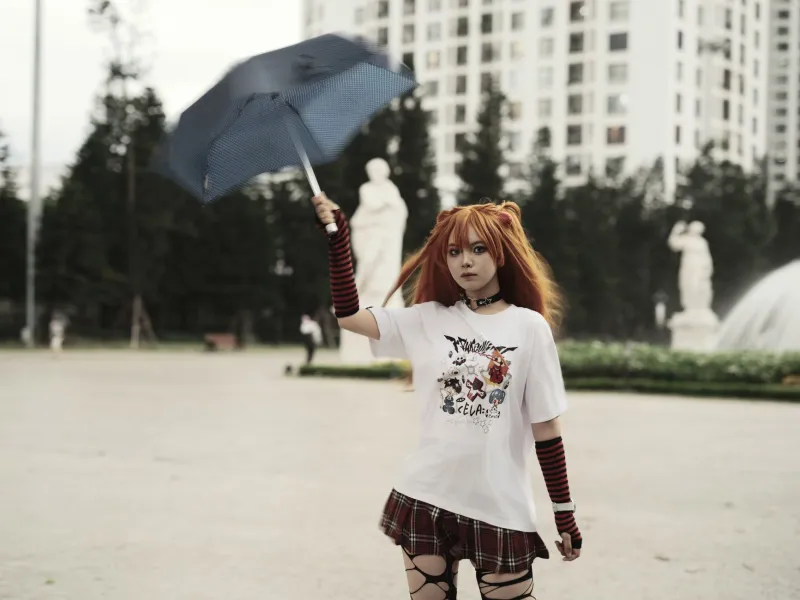
Marin from My Dress-Up Darling deserves her own paragraph here because her cosplay-girl aesthetic — bold patterns, statement accessories, zero apologies — became a genuine style reference point for American Gen Z fans who had never picked up a sewing kit in their lives but absolutely wanted the energy. Her character essentially made "dressing like you're always slightly in costume" socially acceptable, and fast fashion brands responded accordingly with maximalist pieces that blur the line between everyday wear and cosplay-lite.
Urban Outfitters has taken a slightly more curated approach, leaning into collaborations and licensed merchandise that feel less like knockoffs and more like intentional crossover moments. Their anime-adjacent drops — graphic tees, retro-style varsity jackets, accessories that nod to specific series without screaming them — have been consistent sellers, particularly among fans who want the reference without the full cosplay commitment.
The Creators Caught in the Middle
Not everyone is thrilled about how quickly anime aesthetics get absorbed into the fast fashion machine. Independent anime fashion creators — the people who have been meticulously building coordinate guides, thrifting for the perfect soft girl piece, and hand-sewing their own Lolita-adjacent looks for years — have complicated feelings about the whole situation.
Communities on Reddit, Tumblr, and Discord that have long celebrated Japanese street fashion subcultures like Harajuku, Lolita, and Mori Girl watch the mainstreaming of their aesthetics with a mix of pride and exhaustion. On one hand, more people engaging with Japanese fashion culture means more visibility, more community members, and more options in the market. On the other hand, a $12 Shein blazer that falls apart after two washes is not exactly honoring the craftsmanship tradition behind, say, a genuine Angelic Pretty Lolita dress that someone saved up three months to afford.
The conversation around homage versus commercialization gets thorny fast. When a major brand slaps a vaguely anime-ish illustration on a hoodie without crediting any specific artist or series, is that appreciation or just aesthetic strip-mining? Most creators we've seen discuss this online land somewhere in the middle — grateful for the cultural moment, frustrated by the execution, and very clear about which brands are doing it thoughtfully versus which ones are just chasing clicks.
Why This Trend Has More Staying Power Than You Think
Fashion trends usually have expiration dates, but anime aesthetics keep refreshing themselves because the source material never stops. Every new season brings new characters, new visual styles, new color palettes that fans immediately want to translate into real clothes. Demon Slayer's traditional Japanese patterns showed up in kimono-inspired streetwear almost immediately after the series blew up. Oshi no Ko's idol-core aesthetic is already influencing how young women are styling their stage-ready going-out looks.
This isn't a passing micro-trend — it's a feedback loop. Anime creates characters with distinct, memorable aesthetics. Fans fall in love with those characters. Fans want to embody those characters. Brands (and individual creators) supply the clothes. New anime drops. Cycle repeats.
Gen Z grew up watching anime at an age when personal style was just forming, which means these visual references are genuinely foundational to how a huge chunk of young Americans understand what "looking cool" even means. That's not something fast fashion can fully capitalize on — but it's also not something it's going to stop trying to do.
The Bottom Line
Anime didn't just influence fashion — it became a legitimate aesthetic language that Gen Z is fluent in. Whether you're soft-girl-carding your way through a cottagecore phase or layering techwear like you're about to jack into a cyberpunk dystopia, there's an anime character somewhere who got there first and did it better. The fast fashion brands know it. The independent creators know it. And honestly? Your TikTok For You Page definitely knows it.
The closet of 2025 is increasingly a mood board pulled from twenty years of anime character design, and we are not even a little bit mad about it.