Falling for a Fictional Girl: How the Waifu Economy Quietly Became Worth Billions
Let's be real for a second. You know someone — maybe a friend, maybe a coworker, maybe the face staring back at you in the mirror — who has a favorite anime character they are just a little too attached to. We're not judging. In fact, the global entertainment industry has spent the last decade building an entire economic empire around exactly that feeling, and it is absolutely printing money.
Welcome to the waifu economy. Population: millions of fans, thousands of characters, and one very profitable emotional gray area.
What Even Is a Waifu, and Why Should You Care?
For the uninitiated, "waifu" is internet slang derived from the Japanese pronunciation of the English word "wife." It refers to a fictional character — almost always from anime or manga — that a fan feels a deep, often romantic attachment to. Think Rem from Re:Zero, Asuna from Sword Art Online, or Miku Nakano from The Quintessential Quintuplets. These aren't just favorite characters. For a significant chunk of the fandom, they're something closer to companions.
The phenomenon has been around as long as anime itself, but what's changed dramatically in the last ten years is how aggressively companies have learned to monetize it. This isn't accidental. It's a finely tuned machine.
Gacha Games: The Slot Machine That Loves You Back
If you want to understand where the real money flows, look no further than the gacha game market. Titles like Genshin Impact, Fate/Grand Order, Azur Lane, and Blue Archive have collectively generated billions of dollars in revenue — and their entire business model is built on one simple psychological hook: "What if your favorite character was just one more pull away?"
Gacha mechanics work like a loot box system, where players spend in-game currency (purchased with real dollars) for a random chance to "summon" characters. The genius — or the evil, depending on your perspective — is that these games don't just sell gameplay. They sell relationships. Characters have birthdays. They send you voice messages. They blush when you interact with them. Genshin Impact alone reportedly grossed over $4 billion in its first two years, and a significant portion of that came from players chasing specific characters they'd emotionally invested in.
Dr. Rachel Kowert, a research psychologist who studies gaming and parasocial relationships, has noted that these bonds aren't inherently unhealthy. "Parasocial relationships — one-sided emotional connections to media figures — are a completely normal part of human psychology," she's explained in various interviews. The issue, experts argue, is when monetization systems are specifically engineered to exploit those feelings through scarcity and reward loops.
In other words: it's not weird to like a character. It is a little suspicious when a company charges you $200 for a 0.6% chance to get her.
Merchandise Culture: The Physical Manifestation of Feelings
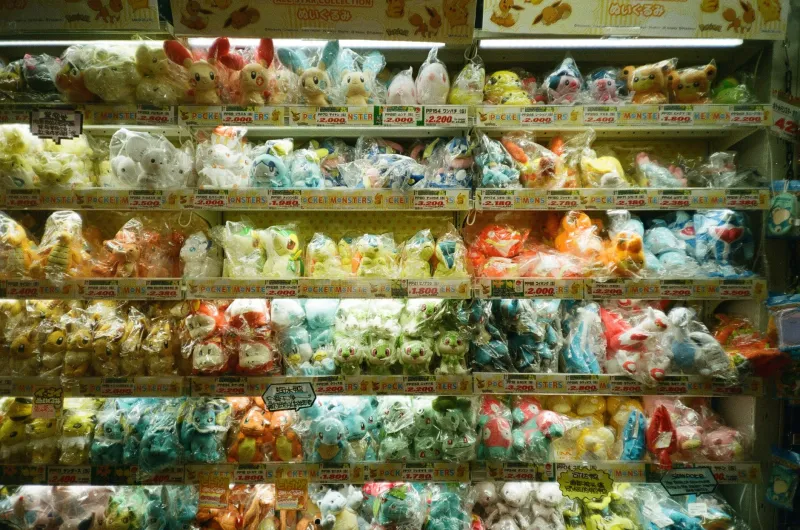
Beyond digital games, the physical merchandise market for anime characters is staggering. The global anime merchandise industry is valued at well over $20 billion, and a huge chunk of that is driven by character-specific product lines — figures, acrylic standees, keychains, themed clothing, and yes, the infamous dakimakura (character body pillows).
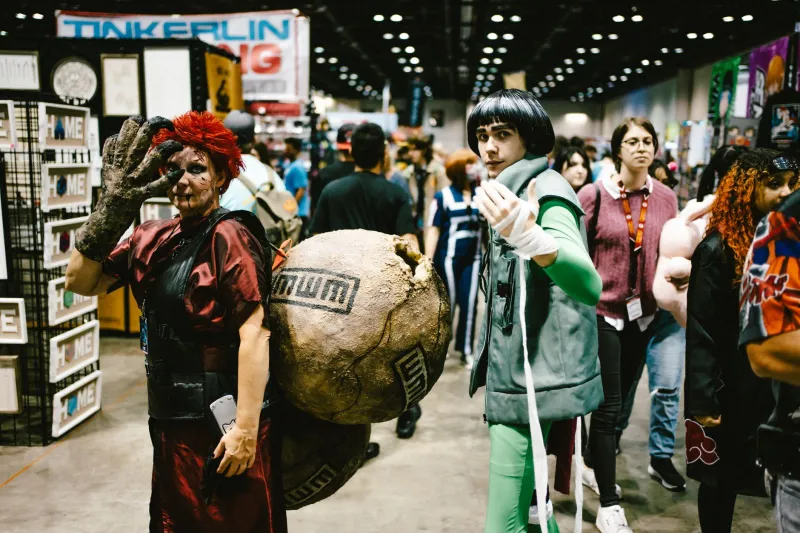
Figure collecting alone is a serious hobby with serious price tags. A single high-end scale figure from manufacturers like Good Smile Company or Alter can run anywhere from $100 to $400. Limited-edition releases sell out in minutes. Secondary market prices can triple or quadruple overnight. Fans in the US have increasingly normalized this spending, with anime conventions like Anime Expo in Los Angeles reporting year-over-year growth in merchandise hall sales.
What makes this market so resilient is the emotional logic behind it. Buying a figure of your favorite character isn't just consumerism — for many fans, it's a way of expressing identity, commemorating a story that genuinely moved them, or simply having something tangible to represent an intangible feeling. Companies understand this, which is why limited runs and "exclusive" variants are such reliable revenue drivers.
American Fans Are Getting Louder About It
Here's what's genuinely shifted in recent years: American anime fans are way less embarrassed about this stuff than they used to be. The "don't tell anyone I watch anime" era is basically over (we covered that whole arc already), and with it, the stigma around character attachment has softened considerably.
Social media has a lot to do with this. Twitter (now X), TikTok, and Reddit are full of fans openly celebrating their favorite characters, posting shrine setups, and casually dropping hundreds of dollars on merch hauls without a hint of irony. Waifu tier lists are a legitimate content genre. "Best girl" debates are a community ritual. The parasocial relationship with 2D characters has been normalized through sheer volume of people doing it publicly.
This cultural shift has not gone unnoticed by Western companies. American publishers and streaming platforms are increasingly licensing gacha games, funding character merchandise lines, and even producing their own waifu-adjacent content because the market demand is undeniably there.
Where Does Fandom End and Something Else Begin?
Okay, but let's ask the slightly uncomfortable question: is any of this a problem?
Psychologists are genuinely split. Some researchers point out that parasocial bonds with fictional characters can serve real emotional functions — providing comfort, modeling healthy relationship behaviors, or offering a safe space to explore feelings. Others raise concerns about substitution, where intense fictional attachments replace rather than supplement real human connection.
The honest answer is probably: it depends. A fan who loves Rem from Re:Zero and also has a rich social life, healthy relationships, and a budget that comfortably accommodates their figure collection? Probably fine. A fan who's spending rent money on gacha pulls because a digital character's birthday event is ending in 48 hours? That's a different conversation.
The industry, for its part, has little incentive to draw that line for you.
The Bottom Line
The waifu economy isn't going anywhere. If anything, it's accelerating. With AI-driven virtual companion apps now entering the space — some specifically designed around anime aesthetics — the line between "fan of a character" and "person in a relationship with software" is getting philosophically blurry in ways that would've seemed like science fiction a decade ago.
For now, though, the industry keeps building characters worth falling for, and fans keep showing up with their wallets open and their hearts ready. Is it a little absurd? Sure. Is it also a completely understandable human response to genuinely compelling storytelling and character design? Also yes.
We contain multitudes. And apparently, so does our love for fictional anime girls.